.png)
Specialist Therapy for the Blue Light & Armed Forces Communities
Support for Police, NHS & Ambulance service, Fire & Rescue Personnel, Armed Forces personnel, veterans and families — available via self-referral, insurance, Occupational Health and charity pathways.

Who this support is for
-
Police Officers & Staff
-
Ambulance & NHS Staff
-
Fire & Rescue Personnel
-
Armed forces personnel & Veterans
-
Partners & Family members
You do not need a diagnosis, referral or to reach crisis point to access support.

You don't have to carry the impact of your duties alone
If you work in the emergency services or armed forces, it’s common to carry more than you realise. The impact is often cumulative — not just one incident, but years of exposure, responsibility and pressure.
The adage "The straw that break's the camels back" is relevant to this and its important to not
mistake the straw as the whole story.
The nuance of these duties matters. Managing threat while staying composed. Switching between
hyper-alert and home life. Carrying authority in uniform and then trying to be present as a partner
or parent. Making decisions that stay with you long after the shift ends. These experiences shape
the nervous system, identity and relationships in subtle but powerful ways.
You might notice you don’t quite feel like yourself anymore. Perhaps you feel more irritable,
detached, on edge or emotionally shut down. Maybe things that once felt manageable now
feel heavier. Or perhaps you’re simply exhausted from holding everything together.
It’s also very common to hesitate before asking for support. In roles built around strength
and reliability, reaching out can feel uncomfortable or unnecessary.
Therapy with me is confidential and independent. There is no organisational reporting without your consent, and you remain in control of what is shared (if at all) and how we work. This is your space — professional, respectful and grounded — where you don’t have to perform or justify how you feel.
If this is of interest - enquire below
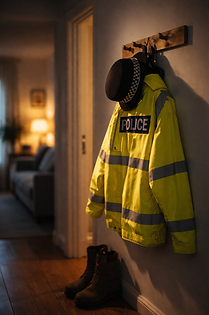
Lived experience & Specialist practice
Working within the emergency services and armed forces is not just a job — it shapes how you think, respond and relate to the world. The culture, the humour, the pressure, the unspoken expectations and the responsibility carried day after day all matter. Alongside professional training, I bring a lived understanding of service environments and the nuance of operational roles (A decade of front line Emergency Services experience). I understand the split between uniform and home life, the cumulative nature of exposure, and the internal expectation to remain composed regardless of impact. For over four years, my specialist therapuetic work had focused on supporting police, ambulance, NHS, fire service personnel, armed forces members and veterans. This has included trauma-related presentations, moral injury, burnout, identity shifts and adjustment after service. My approach is professional but grounded — direct, calm and down to earth. Therapy here is not performative or overly clinical. It is structured where needed, relational where helpful, and always respectful. Confidentiality and clear boundaries are central. This is an independent, discreet space. Nothing is shared with organisations, employers or services without your explicit consent. You can speak freely here — without needing to explain the culture or justify your reactions.
What to expect in sessions
This is what I offer to you:
✔ Calm, confidential space
A professional environment where you can speak openly, without judgement or unnecessary intensity.
✔ No pressure to explain service culture
You won’t need to translate operational language or justify how the role affects you.
✔ Sessions paced to you
We move at a speed that feels manageable — structured where helpful, spacious where needed.
✔ Trauma-informed practice
An understanding of cumulative exposure, moral injury and nervous system impact.
✔ Clear professional boundaries
Confidential, independent and ethically grounded. Nothing is shared without your consent.
Support for Partners
& Family members
Service life affects more than the person in uniform.
The impact often extends quietly into the home.
Living alongside police, emergency service or armed forces work can bring its own unique pressures. The unpredictability, the emotional load, the shift patterns and the responsibility carried by your partner can gradually shape the relationship in subtle ways.
You may not have been present at the incidents — but you may feel the after-effects....
Secondary trauma
Hearing about distressing events, noticing changes in your partner, or living alongside hypervigilance can affect your own nervous system and sense of safety.
Emotional distance
Operational roles often require emotional containment. Over time, this can show up at home as withdrawal, shutdown or difficulty reconnecting.
Role strain
Balancing family life with shift work, on-call demands and organisational pressure can create tension, resentment or feelings of imbalance.
Adjustment challenges
Transitions — promotion, injury, retirement, leaving service
— can disrupt identity, routine and relationship dynamics.

Therapy offers a space to explore these experiences without blame or judgement. Whether you attend individually or as part of a couple, the focus is on understanding the impact of service life and strengthening communication, connection and emotional safety.
Support is available not just for those in uniform — but for those standing beside them.